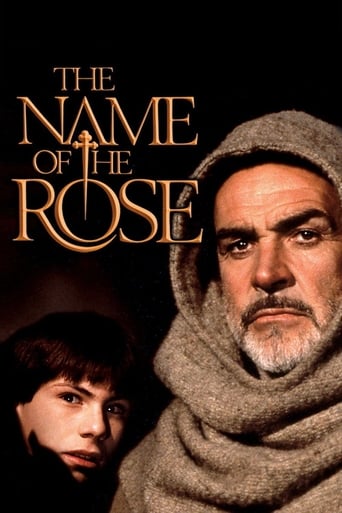
The Name of the Rose (1986) Review: A Perfect, Pitch-Black Gothic Masterpiece Jean-Jacques Annaud's The Name of the Rose is not merely a film; it is an atmosphere, a puzzle box, a philosophical war waged in the shadowy corridors of a decaying abbey. It is a perfect alchemy of intellectual thriller and gothic horror, and decades after its release, it remains an untouchable classic—a film that earns every minute of its runtime and deserves nothing less than a perfect score.
A Labyrinth of Stone and Sin
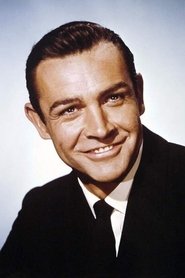
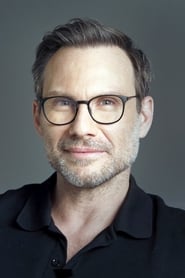
The premise is deceptively simple: the year is 1327. Franciscan monk William of Baskerville (Sean Connery) and his novice Adso (a young Christian Slater) arrive at a remote Benedictine abbey for a theological disputation. Instead, they find a series of gruesome, inexplicable deaths that the superstitious monks believe are the work of the Devil. William, a man of reason and logic far ahead of his time, must use his deductive powers to uncover the truth before the Inquisition arrives to burn it—and anyone nearby—at the stake.
The abbey itself is the first great character of the film. A monolithic, claustrophobic maze of staircases, scriptoriums, and shadowy recesses, it is a character in its own right. The cinematography is a masterclass in gloom, using natural light from torches and windows to paint a world literally and metaphorically emerging from the Dark Ages. The sense of dread is palpable, a chilling mist that seeps from the stone walls.
The Unforgettable Performances
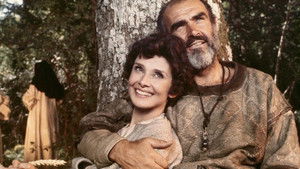
Sean Connery is, quite simply, iconic. He sheds his James Bond persona completely to become William of Baskerville—a man of wry wit, profound intelligence, and a deep-seated weariness with human folly. His performance is the film's brilliant, logical heart. Opposite him, F. Murray Abraham delivers a chilling, Oscar-worthy performance as the Grand Inquisitor, Bernardo Gui. Their confrontations are not physical battles but electrifying duels of ideology and intellect.
But beyond the two titans at its centre, the film is populated by a gallery of unforgettable faces, two of which leave an indelible mark.
Ron Perlman as Salvatore: In a film full of brilliant casting, Ron Perlman's performance is a standout. Under some of the most convincing and grotesque prosthetic makeup of the era, Perlman completely vanishes into the role of the deformed, simple-minded cellarer's assistant. He is a creature of grunts and fractured, multi-lingual speech, a living embodiment of the era's poverty and superstition. Yet Perlman infuses him with a pathetic, almost childlike humanity. You fear him, you pity him, and you cannot take your eyes off him. It is a physical and vocal performance of astonishing commitment that adds a crucial layer of visceral, earthly grime to the film's high-minded intrigue.
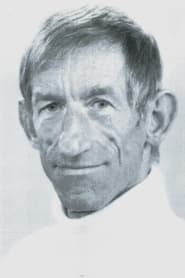
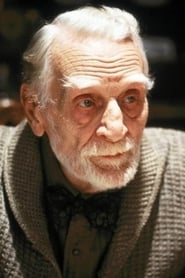
Feodor Chaliapin Jr. as Jorge de Burgos: If Salvatore represents the body's decay, Jorge de Burgos represents the mind's corruption. Played with terrifying, serene authority by Feodor Chaliapin Jr., the blind, ancient librarian is one of cinema's greatest and most understated villains. Chaliapin, with his clouded eyes and voice like crumbling parchment, is utterly mesmerizing. He is a monument to dogma, a man so convinced of his own righteousness that he is willing to commit any sin to protect it. His final scenes in the labyrinthine library are some of the most tense and philosophically charged in film history. He is not a cackling monster, but a calm, intelligent, and truly terrifying force of anti-knowledge.
The Verdict: A Timeless Classic
10 out of 10 - A Flawless Gothic Tapestry
The Name of the Rose is a rare film that satisfies on every level. It is a gripping detective story, a profound historical drama, a chilling horror, and a biting satire of religious hypocrisy—all woven together with impeccable craft. The direction is assured, the script is intelligent and witty, and the atmosphere is thick enough to taste.
It is a film that respects its audience, trusting them to follow its complex mystery and weighty themes. And at the heart of its dark, magnificent tapestry are performances—from the legendary leads to the unforgettable character actors like Ron Perlman and Feodor Chaliapin Jr.—that are etched in memory forever. It is, and will likely remain, perfect.